
Decode Classic VINs to Get Vehicle History Report and Build Sheet
Recommended Classic VIN Lookup Tools
Classic Car Insurance: Best Guide For Buyers and Collectors
Dec 12, 2025

Having a classic car does not just mean driving but being a part of history. Classic cars are not just cars but a piece of art that should be treated with special attention.
It is here that classic car insurance comes in. It is not like regular car insurance because it is designed to safeguard the valuable cars of collectors and enthusiasts who wish to insure their vehicles at their full, agreed-upon value.
This guide will explain what classic car insurance is, how it operates, what is covered, who is eligible, and how to select the most appropriate policy to cover your vintage car.
Key Takeaways
 In classic car insurance, the old and collectible cars are insured at their agreed value and not the lesser market value, as in the case of regular auto insurance.
- The classic car insurance quote coverage covers repairs, rare parts, and events and is ideal when the car is used in shows or is stored securely rather than used on a daily basis.
- Choosing an agreed value coverage and a reputable insurer is the best way to make sure that the true value and history of your classic car are fully covered in the coming years.
What Is Classic Car Insurance?
Classic car insurance (collector car insurance) is a type of policy that protects older or collectible vehicles. It’s designed for cars that are not used for daily driving but are maintained, restored, and often shown at events or exhibitions.
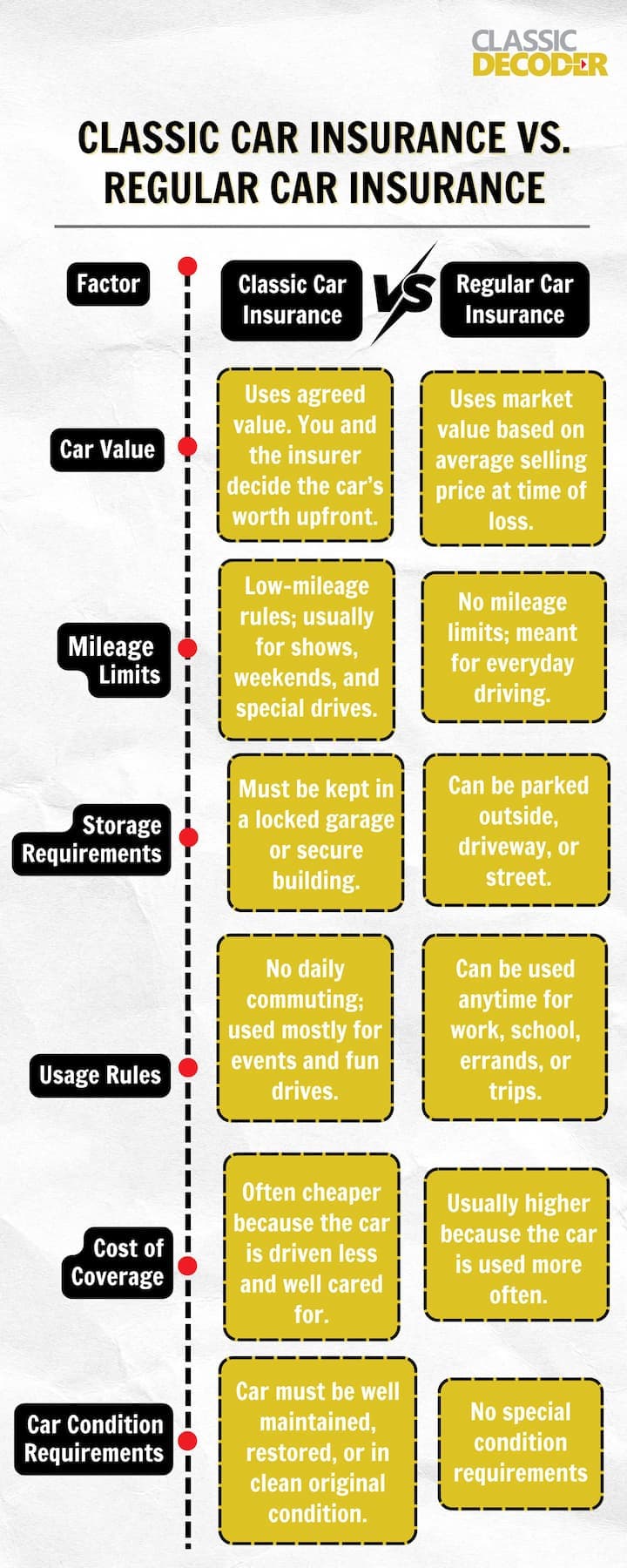
Regular auto insurance values cars based on their market or “book” value, which goes down as the car ages. But with classic car insurance, the value often goes up over time because well-kept classic cars can become more valuable as they get older.
With this kind of coverage, you and the insurer agree on your car’s value before the policy starts. If your vehicle is damaged or stolen, you’re paid that full amount, not a lower depreciated value. That’s what makes classic car insurance special - it protects the true worth of your collector car.
What Makes a Car a Classic?
No one rule exists on what constitutes a classic car. However, most vehicles are eligible at 25-30 years old, according to the Insurance Information Institute (III). Nevertheless, age is not the only thing that counts.
A more recent car can be called classic as well, provided that:
- It is significantly more expensive than it was originally sold, or
- It has become rare or collectible.
Generally, a classic car is a car that is not driven on a regular basis, has a small number in production, and is appreciated due to its design, history or uniqueness. Most are valued not only by their age but also by the recollections and the artistry they symbolize, such as the Chevrolet Corvette, Ford Mustang, and Porsche 911.
READ ALSO: What Makes a Car to be a Classic
Why Classic Cars Need Special Insurance
Classic cars are not like everyday cars. Their value depends on history, rarity, and restoration, not mileage or resale price.
Standard auto insurance doesn’t understand that. It assumes older cars are worth less, which means you could be underpaid if your classic is damaged or lost. The classic car insurance policy respects the time, effort, and money you’ve put into your vintage vehicle
Collector car insurance solves this problem by:
- Protecting the full value: You and the insurer agree on the car’s worth ahead of time.
- Covering rare parts and repairs: It includes coverage for hard-to-find parts and professional restoration work.
- Recognizing collector use: It’s made for cars driven occasionally, not every day.
Types of Classic Car Insurance Coverage
Classic car insurance isn’t one-size-fits-all. Different owners and vehicles have different needs, so insurers offer several types of coverage. Here are the most common ones:
Agreed Value Coverage
This is the most important part of classic car insurance. You and your insurer agree on your car’s value before the policy starts. If your vehicle is stolen or totaled, you’ll receive that full amount, not the lower market value used in regular insurance.
Comprehensive and Collision Coverage
This protects your car from damage caused by accidents, fire, theft, vandalism, or natural disasters. Even if you’re not driving your car every day, unexpected events can still happen in storage or transport.
Spare Parts Coverage
Classic cars often need hard-to-find or expensive parts. This coverage helps pay for replacement parts, whether you’re restoring an old Chevy or maintaining a rare Porsche.
Roadside Assistance
Classic cars can be unpredictable. This coverage provides towing, fuel delivery, and emergency help if your car breaks down, often by specialists who handle vintage vehicles carefully.
Trip Interruption Coverage
If your car breaks down far from home during a show or event, this coverage can help with hotel stays, meals, and transport while it’s being repaired.
Liability Coverage
If you cause an accident while driving your classic car, liability insurance helps cover the costs of damage or injury to others. It’s required in most states.
Auto Show and Event Coverage
Many classic car owners take pride in showing off their vehicles. This coverage protects your car while it’s on display, in transport, or parked at shows and exhibitions.
Restoration Coverage
If you’re restoring your classic car, this coverage protects it during the rebuild process. It can include tools, equipment, and even partially restored vehicles in your garage.
How Does Classic Car Insurance Work?
Classic car insurance works a lot like standard insurance, but with some differences.
- 1.Apply for a policy: Provide details about your car, its value, storage, and how often you drive it. To determine your classic car value, use our accurate classic car value calculator for free.
- 2.The insurer reviews it: They may ask for photos, proof of ownership, or appraisal reports.
- 3.Agree on the value: Both sides decide on an “agreed value” based on your car’s make, model, and condition.
- 4.Pay a premium: Premiums are often lower than regular car insurance because classic cars are driven less.
- 5.Get Coverage: If something happens, you’ll receive the full agreed amount (minus any deductible).
Who Qualifies for Classic Car Insurance?
Classic car insurance is not available to all cars and drivers. Since such policies are meant to cover special and collectible cars, the insurance companies have certain policies to ensure that the cars are in good condition and not used as a daily driver. These are some of the considerations:
The Vehicle Has to Be a Real Classic
The majority of insurers define a car as classic when it is aged at least 20 to 30 years, well-preserved, and has an historical/collectible value. But even more recent cars such as restomods, hot rods, and limited-edition sports cars can also be eligible as long as they are considered to be special-interest models.
The Car Must Be Kept in a Secure Place
When the classic car is not in use, it is customary to have the car kept in a secure and enclosed garage or storage facility. This assists in avoiding theft, weather damage and vandalism.
Limited or Occasional Driving Only
You cannot drive your old car to the market or go to work every day to remain insured. The majority of the policies permit only a few leisure drives, club events or car shows. Some insurers even monitor mileage to ensure that there is low usage.
Clean Driving Record
Drivers who have a good record such as few or no recent accidents or violations are more likely to qualify. The insurers would like to know that you are a responsible car owner who takes care of valuable cars.
Evidence of Another Car for Daily Use
As classic cars are not designed to be used on a daily basis, most insurers would demand that you have a second insured car to use daily. This will show that your classic is not your daily driver, but a hobby car.
Continuous Maintenance or Restoration
You can also have cover even if your classic car is still under restoration, as long as it is actively undergoing restoration and well-documented. Restoration policies are provided by many insurers to cover cars in the rebuilding process.
How Much Is Classic Car Insurance?
On average, owners pay $200 to $100 per year, but high-value vehicles may cost more. Classic car insurance is often cheaper than standard auto insurance. Because these cars are driven less, they have fewer accidents and less risk.
The cost depends on the following factors:
- Your car’s agreed value
- Vehicle condition
- Mileage limits
- Storage safety
- Location and state laws
- Your driving record
For instance, a well-kept 1969 Camaro worth $40,000 may cost around $400 per year, while a rare Ferrari or Aston Martin worth over $100,000 could cost $800 or more.
Tips for Choosing the Right Classic Car Insurance
Taking time to review details ensures your car gets the protection it deserves. Here are a few helpful tips to get the best classic car insurance quote:
- Compare policies: Don’t pick the first offer. Compare coverage limits and perks.
- Look for agreed value: Avoid policies with “stated value” only; they can pay less than expected.
- Check mileage rules: Make sure you can drive enough for shows and joy rides.
- Ask about storage requirements: Some companies only cover cars stored indoors.
- Read the fine print: Understand what’s covered and what’s not.
- Choose a specialist insurer: Companies that focus on classic cars know the collector market best.
Some tips to keep insurance costs low include:
- Store safely: Keep your car in a locked garage.
- Drive less: Stay within mileage limits.
- Join a car club: Some insurers offer member discounts.
- Bundle policies: Combine home and auto for lower rates.
- Maintain your car: Regular care reduces claim risk and keeps value high.
Benefits of Classic Car Insurance
Owning a classic car is a joy, but protecting it with the right insurance makes all the difference. Classic car insurance offers unique benefits that regular auto insurance simply can’t match.
Here are some key benefits that make classic car insurance worth it:
Full Agreed Value Protection
Unlike standard insurance, which only pays the current market value, classic car insurance uses agreed value coverage. This means you and your insurer decide what your car is worth upfront. If your car is stolen or severely damaged, you get that full agreed-upon amount, no depreciation, no surprises.
Lower Premiums for Responsible Owners
Because classic cars aren’t driven daily, they carry less risk. Insurers reward this with lower insurance rates, making coverage more affordable compared to regular auto insurance. You save money while still keeping full protection.
Coverage for Rare and Original Parts
Classic car parts can be expensive and hard to find. Many policies cover original or rare parts, so you can repair your car correctly and keep its authenticity. Some even pay for parts you keep in storage..
Specialized Repairs and Expertise
Classic car insurers often work with repair shops that specialize in vintage and collector vehicles. This ensures your car is fixed by skilled experts who understand how to handle older models with care.
Flexible Mileage Options
Since every classic car owner drives differently, insurers often let you choose your annual mileage limit. Whether you drive to weekend shows or take it out once a month, there’s a plan that fits your usage.
Peace of Mind and Actual Value Protection
Classic car insurance gives you peace of mind, knowing it’s covered for its true worth, not just a random price in a book.
Top Classic Car Insurance Quote Providers in the US
Choosing a provider that understands collector vehicles makes a big difference in service and support. Some of the most trusted providers of collector car insurance include:
- Hagerty: Known for agreed-value coverage and roadside assistance.
- Grundy Insurance: Offers flexible mileage and restoration protection.
- Chubb: Provides premier coverage for high-value or limited-production classics.
- American Collectors Insurance: Great for car clubs and multi-car discounts.
- State Farm (Classic Program): Offers bundled options for everyday and collector cars.
Why Check Classic Car Records Before Insurance?
Running a classic vehicle history before insuring your classic protects you from coverage denials, wrong valuations, and policy cancellations later on. Here’s what it checks:
Reveal Hidden Damage and Title Problems
Previous accidents, salvage brands, and flood damage destroy your car's real value. Insurance companies adjust premiums or deny coverage completely when they find out about any hidden damage.
Verify Clean Theft and Lien History
Stolen vehicle records or outstanding loans create major insurance headaches. Insurers won't cover cars with theft flags or active liens because these create massive legal and financial risks.
Get Accurate Agreed-Value Coverage
Classic car insurance needs proper valuation based on actual condition. Hidden problems mean you're paying premiums for coverage amounts your car doesn't deserve, wasting money on inflated values.
Prevent Policy Cancellation and Fraud Claims
Insurers check vehicle history during claims processing for fraud detection. Undisclosed accidents or title brands can void your entire policy right when you desperately need coverage most.
READ ALSO: What To Check Before Buying A Classic Car
Protect Your Passion with Classic Car Insurance
Classic cars are stories of design, history, and craftsmanship and with the appropriate cover, you can enjoy them without worrying about losing or damaging them. Classic car insurance aims at ensuring that your special and beloved car remains secure and your sanity intact, so that your classic can remain part of your story in the years to come.
Common Questions About Classic Car Insurance
A car is typically considered a classic when it is between 25 and 30 years old, in excellent condition and has collectible or historical interest. Classic car insurance can also be provided to some newer limited-edition cars or high-value cars.
Collector car insurance is a specialty insurance that is offered to rare, vintage, or limited-edition automobiles. It includes the agreed value of the car, secures rare parts, and provides a flexible amount of miles because these cars are not driven on a daily basis.
YOnce your car has reached the age, condition, and usage requirements, then you can get classic car insurance. It should be in good condition, kept in a safe place, and driven only on leisure occasions, exhibitions, or shows, and not on a daily basis.
Yes. Majority of classic car insurance covers rare or original replacement parts. This assists the owners to repair or restore their vehicles with original materials hence retaining the originality and value of the car.
Classic truck coverage is similar to classic car coverage. It provides agreed value protection, reduced premiums in limited driving, and coverage of restoration, spares, and events, and is created to cover trucks having a historical or collectible value.

Senior Content Writer
Joses Peter is a professional automotive writer at Classic Decoder with a strong background in long-form content and technical writing. With a portfolio of 100+ blog posts and two published papers, she covers classic cars, vehicle history, VIN lookup, restoration topics, and automotive technology in a way that is easy for readers to understand. Her passion for automobiles and research helps her turn complex subjects into useful, reader-friendly content for collectors, buyers, & enthusiasts