

Decode a Classic Porsche VIN for Free
Before buying or restoring an older Porsche, decode your classic VIN to check available specifications such as year, model, engine type, transmission, body information, and estimated market price. This gives you a clearer starting point before deeper inspection or record checks.


Decode Classic VINs to Get Vehicle History Report and Build Sheet
Popular Manufacturer
What Can a Classic Porsche VIN Help You Confirm?
Classic Porsche vehicles are highly sensitive to originality, model year, body style, engine configuration, and documentation. A VIN decode helps you review the basic Porsche specifications before relying on seller claims, badges, paperwork, or visible condition alone.
Here are Porsche-specific checks that matter before buying, restoring, or valuing the car:
Identify the Porsche model
Check whether the number points toward a 356, 911, 912, 914, 930, 924, 928, 944, or another Porsche model family.
Review model-year clues
Older Porsche numbers can help narrow the production year or period, which is important for parts, value, and restoration planning.
Compare chassis and engine information
Use decoded specifications as a starting point, then compare them with chassis stamping, engine number, documents, and physical inspection.
Support collector confidence
Clear Porsche specifications can help with valuation, registration, insurance, resale preparation, and ownership records.
Why Early Porsche Numbers Need Careful Reading
Older Porsches may use shorter VIN formats, model-specific numbering, and engine-related identifiers that do not always behave like modern 17-character VINs. This is why older Porsche models often need classic-specific decoding.
Early Porsche identification can be different because of:
Chassis-led identification
Many older Porsche models are strongly tied to chassis numbers, especially 356, early 911, 912, and 914 vehicles.
Shorter old formats
Pre-1981 Porsche vehicles may use fewer than 17 characters, including 5-, 6-, 8-, 9-, and 10-digit formats depending on year.
Model-code importance
Porsche numbers can help distinguish model families, such as 911, 912, 914, 930 Turbo, 924, and 928.
Engine-number comparison
Engine numbers are important for Porsche collector or owner, but they should be compared carefully because engines may have been rebuilt or replaced.
Where To Find Classic Porsche VIN Number?
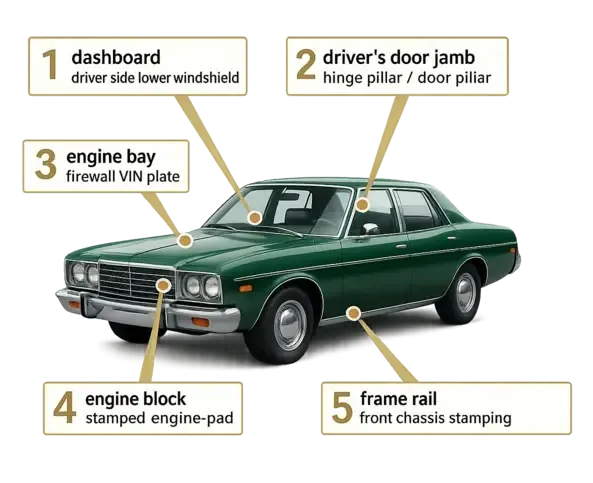
Classic Porsches hide their VIN stamps in different spots depending on the model and year it was built. Some common places include:
On the Porsche Car
Dashboard VIN Plate
Front Trunk Area
Door Sill Plate
Engine Compartment
Windshield Post
Chassis Rail
In the Documents
Registration Document
Owner's Manual Pouch
Door Sill Plate
Service Book
Import Papers
Purchase Invoice
How To Decode Classic Porsche VIN?
Use the VIN field on this page to review the available basic specifications for your classic Porsche.
- 1
Enter the Classic Porsche VIN
Type the VIN, chassis number, or available Porsche identification number into the search field. - 2
Start the classic decode
Click “Decode Classic VIN” to initiate the free VIN decoding process. Our tool will read the VIN to provide basic specs like year, make, model, engine, transmission, capacity, fuel type, and more - 3
Review basic Porsche specifications
Compare the available specifications with the vehicle and seller description.
What Can You Check From a Classic Porsche VIN for Free?
The free decode gives users a quick way to review basic Porsche specifications before contacting a seller, comparing visible features, or planning restoration research.
The information provided includes:
 Transmission
 Drive type
 No. of doors
 Engine information (Type, cylinder, displacement, torque)
 No. Of Gears
 Axle type
 Wheels, rims & tires
Want to Go Beyond the Free Porsche Decode?
A free VIN decode can confirm basic Porsche specifications, but collector risk often sits in the records behind the vehicle. Before buying a classic Porsche, a paid VIN check can help reveal available records that may affect value, ownership, registration, or resale confidence.
Records may include:

Title Brand
Check whether the Porsche has title branding that could affect registration, insurance, or resale.
Damage Record
Review available accident or damage records before assuming the car’s condition matches the listing.
Ownership History
See available ownership changes to understand how the Porsche may have moved over time.
Auction
Check past auction listings, sale activity, prices, and condition notes when available.
Mileage Fraud
Compare mileage readings to help identify possible odometer inconsistencies.
Theft Check
See whether the Porsche appears in available stolen vehicle records.
Lien/Loan
Check for possible finance-related concerns before making a purchase decision.
Salvage Brand
Look for salvage branding that may point to insurance loss, rebuilding, or major past damage.
Popular Classic Porsche Models, Years & VINs We Support
Lists popular classic Porsche models, model years, common VIN lengths, and sample VIN formats by year range, covering Porsche vehicles built before 1981.
| Year Range | Popular Porsche Models | Common VIN Format | Example VIN |
|---|---|---|---|
1950s–1963 | Porsche 356, 356A, 356B, Speedster, coupe, cabriolet | Short chassis numbers | 118866 |
1964–1965 | Porsche 356C, early 911, 904 | Short chassis/serial numbers | 218592 |
1966–1969 | Porsche 911, 912 | Short serial-style VINs | 303356 |
1970–1973 | Porsche 911, 911T, 911E, 911S, 914 | Usually 10 characters | 9113300655 |
1974–1977 | Porsche 911, 914, 930 Turbo, early 924 | Usually 10 characters | 9116609023 |
1978–1980 | Porsche 911, 930 Turbo, 924, 928 | 10–17 characters | 9119111980 |
Why Should You Use This Porsche VIN Tool?
Classic Decoder helps Porsche buyers, owners, and restorers check older VIN formats, review basic specifications, and decide whether deeper records or factory build information are needed.
Here is why it works well for classic Porsche collector or buyer:
Trusted & Updated Data
We use trusted, regularly updated sources, including DVLA, police, insurance, finance, auction, and proprietary online sales records.
24/7 VIN Expert Support
Live chat support is available whenever users need help with a VIN, report, or next step.
Unlimited Free VIN Decoder
Check essential manufacturer specifications such as engine size, trim, and features to help confirm whether the Porsche matches the seller description.
Downloadable PDF Reports
Get clean, easy-to-read PDF reports you can save, share, and access anytime.
What Classic Porsche Owners Say
Yo check it, I was looking for details on a vehicle and couldn’t find no info at all until I came across classic decoder I put my info in and BAM instantly receive a phone call from rep that was very helpful on getting me everything I needed to know on my dream car very helpful.
ISAIAH CARSON
Very helpful and detailed! There was a classic Hanomag I've trying to look for, and I've found more information thanks to Classic Decoder! I've tried many other websites, but to no use. Classic Decoder has been very supportive in my search!
Uday
"I'm impressed! The VIN Decoder app is a game-changer for anyone who needs to quickly and accurately decode vehicle identification numbers (VINs). As a used car buyer, I've found this app to be an indispensable tool.
Cephas Atidza
Classic Decoder offers an easy way to decode the VIN of classic cars, providing detailed reports on vehicle history, specifications, and build sheets. It’s a valuable resource for classic car enthusiasts, ensuring they can verify authenticity, uncover vehicle details, and maintain records. With support for over 500 manufacturers, it's a must-visit for those passionate about classic cars.
Mohammad Ali
Get Classic Porsche Build Sheet
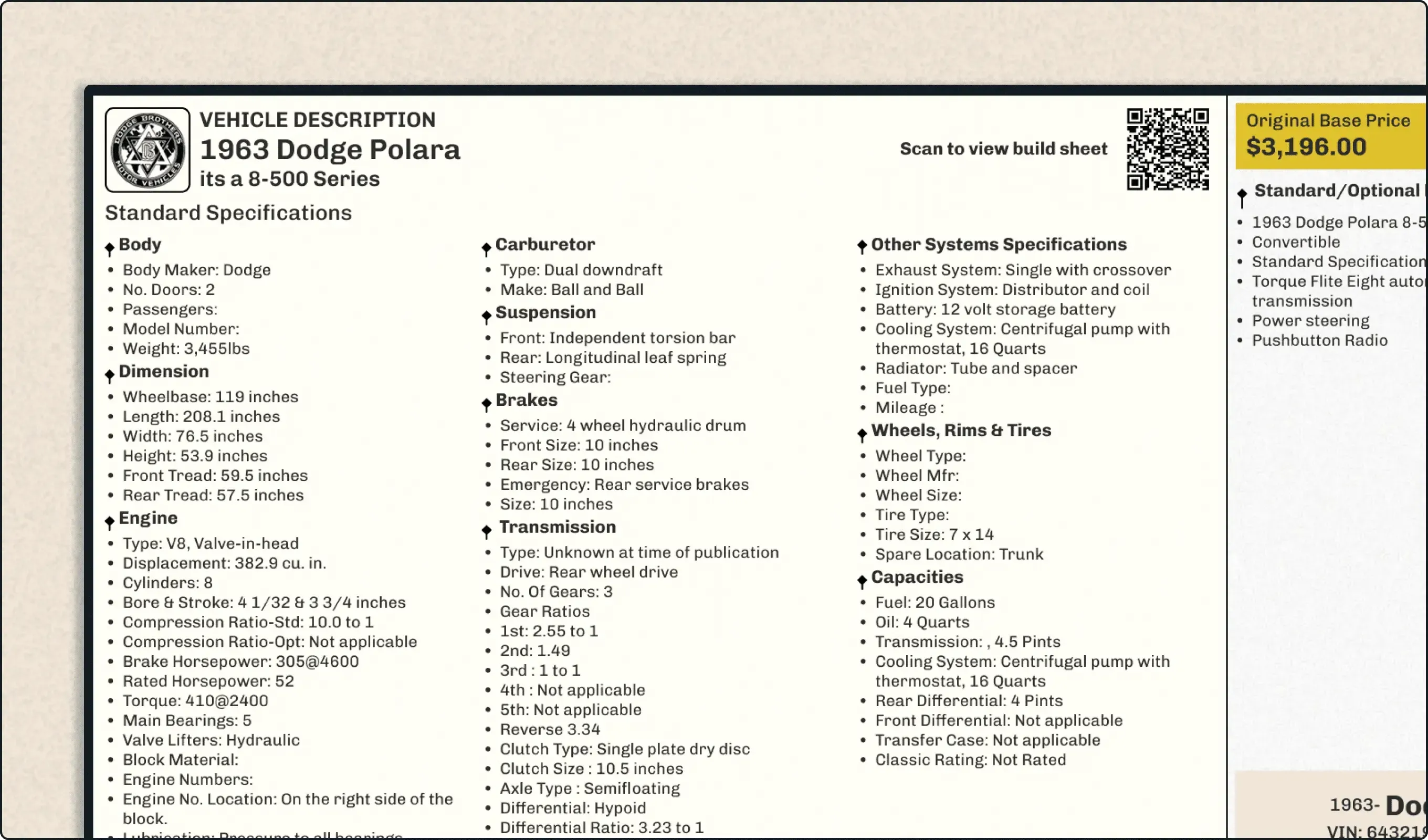
Factory build sheets are original documents that list every single option and specification installed when your Porsche was assembled new.
A classic Porsche build sheet includes:
 Vehicle Identification Number (VIN)
- Paint color codes (exterior and interior)
- Engine specifications and transmission type
- Standard equipment
- Factory-installed options
- Original base price (MSRP)
- Axle ratio and differential type
- Production number
Download the Classic Decoder Mobile Application
Download our app now for instant classic Pontiac VIN lookups anywhere you go, with camera scanning that reads VINs automatically from photos.
Features That Set Us Apart
Download now and uncover mysteries in a flash!. Get it on App Store and Google Play.




Decode Classic VINs of the following Car Brands
We decode VINs for classic cars from all major manufacturers, helping collectors verify authenticity across different brands and countries. These include:
Check Your Classic Porsche Today
Start with the free Porsche decode to review basic specifications. If you need ownership, title brand, damage, auction, mileage, theft, finance, or salvage records, continue with a paid check.
Classic Porsche VIN Decoder FAQ.
Standard decoders fail on classic Porsches because they expect 17-digit modern VINs. You must use a specialized old Porsche VIN decoder that reads the shorter VIN numbers used before the VIN standardization.
Some pre-1981 Porsches used 10-digit chassis numbers. After 1981, all manufacturers switched to standardized 17-digit VINs that follow worldwide rules for every position. To learn more about the specs of a Porsche with a 10 digit VIN, use our 10 digit Porsche VIN decoder.
Free decoders give reliable basic factory data like year, make, model and engine type. Complete reports, including accident records, title info, and ownership history, require a paid Porsche VIN number lookup from Classic Decoder
With our free VIN decoder, you will get information about a vehicle’s year, make, model, engine, transmission, gear ratios, capacity, body style, and more. You need to use a Porsche VIN number lookup tool to get the classic vehicle history report, which reveals title status, theft records, liens, sales history, auction history, and more.
To use the classic Porsche VIN decoder, simply enter the VIN (Vehicle Identification Number) into the form on our website and click “Decode VIN” to access detailed car specifications.
Yes, our pre-1981 Porsche VIN decoder is highly accurate and provides reliable vehicle information retrieved from trusted classic car databases.