
Decode Classic VINs to Get Vehicle History Report and Build Sheet
Recommended Classic VIN Lookup Tools
The Rise and Fall of Studebaker: What Actually Went Wrong?
Jan 25, 2026
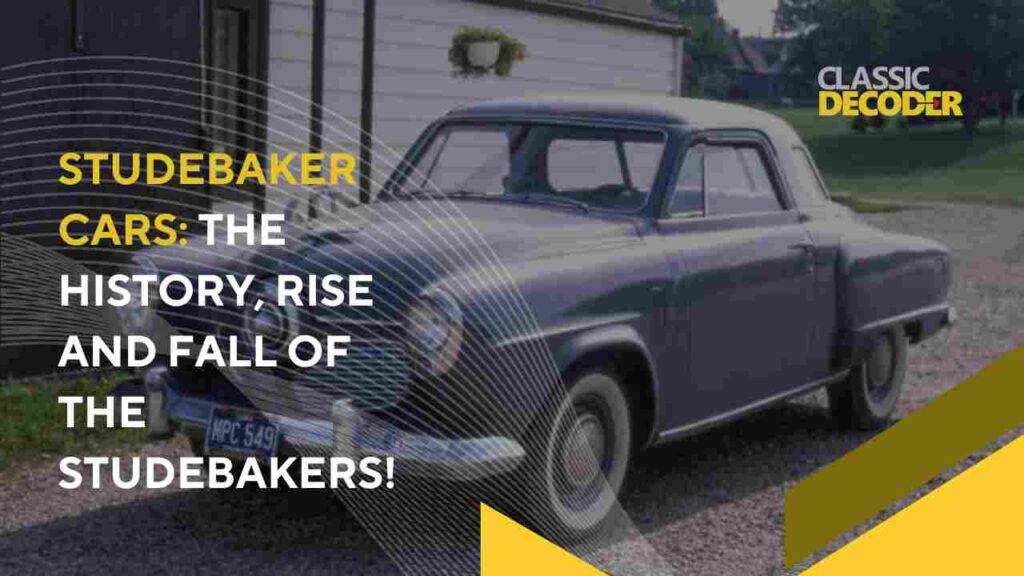
Studebaker manufactured cars for over 100 years and used to be one of the biggest names in the automotive industry before things went wrong.
The Studebaker brand is a leading innovator in car design with a captivating story from its humble beginnings in the mid-1800s as a wagon manufacturer to its heyday in the 1950s and 60s.
This article discusses the history of the Studebaker cars and the reasons behind their business’s rise and fall. We will also provide helpful tips for keeping a classic Studebaker in top condition if you own or plan to acquire one.
KEY TAKEAWAYS
 Studebaker started as a wagon maker in 1852 and became a top car brand before closing in 1966 due to competition and poor decisions.
- Financial mistakes like buying Packard, worker strikes, and inability to compete with Ford and GM ultimately ended Studebaker's 100-year manufacturing legacy.
- If you’re buying a classic Studebaker, it’s recommended that you perform a studebaker VIN decoder to verify the original specs, features, and full history report.
What is So Special About Studebaker Car Models?
Studebaker cars are admired because of their outstanding features, which combine visual look and engineering novelty. Since their appearance in the car market, they turned out to be outstanding because of their stylish design and functionality.
Progressive Engineering Innovation
First of all, it is their engineering that, for that time, was quite progressive. The independent front suspension applied in the 1947 Commander provided better handling and comfort during driving.
Bold Aesthetic Design
Aesthetically, Studebaker cars often featured bold lines and unique body styles, especially in the post-war years, of which Studebaker models such as the Avanti featured a sleek-even futuristic design that would, if anything, still turn heads today.
Craftsmanship and Quality
Their commitment to craftsmanship and quality set them apart from competitors and made the brand close to a preeminent symbol of American ingenuity in halcyon days.
This combination of style and engineering made Studebaker cars the prize, not only in performance but also as collector's items among classic car enthusiasts.
READ ALSO: Best Vintage American Cars
Studebaker Car History
Studebaker's journey began in 1852 when the five Studebaker brothers founded it as a manufacturer of wagons in South Bend, Indiana. They built their first two wagons for business owners and for traveling throughout the country.
From Wagon to Wheels
The maiden Studebakers were covered wagons that helped develop the American West. By 1860, Studebaker was already manufacturing thousands of covered wagons that most early settlers in America valued and enjoyed for traveling.
Transition to Automobiles
By the turn of the century, the car company tagged itself: "The World on Wheels" and transitioned to automobile production to make their first electric vehicle in 1902. This was followed by their first gas-powered model two years later. In the 1920s, Studebaker was already a top automotive brand.
In 1909, Studebaker sold $9.5 million worth of automobiles. However, the company stopped selling electric cars in 1911 and became the Studebaker Corporation.
Key Milestones in Studebaker’s Automotive History
The highlights in their automotive history include:
- 1914: The first Studebaker car powered by gasoline, the Studebaker 4, was introduced.
- 1939: The Studebaker Champion was introduced, easily recognizable by its fresh, innovative design and streamlined, weathered body.
- 1953: Avanti released a combination of performance with striking design; it stands out as one of the most iconic automobiles to bear the name.
After several successful decades, the company fell victim to changed market conditions in the 1960s and dwindled to reduced production until early in the decade.
Most Popular Studebaker Models
Today, however, the legacy of Studebaker remains alive and very well in the car universe. Studebaker manufactured several different car models with which various collectors and enthusiasts alike have fallen in love.
Here is an exclusive list of some of the best:
Studebaker Avanti (1962-1963)
A car renowned for style and avant-garde features, Avanti was among those very few cars that pioneered advanced design coupled with luxury features in aerodynamics.
The Studebaker Champion (1939-1958)
This is the classic that personified post-war American optimism, mainly because this car had been popularly recognized due to its affordability, reliability, and distinctive styling.
Studebaker Commander: 1935-1964
This was a somewhat versatile model, which changed many faces throughout the years, offering different body styles and options to appeal to varied tastes and needs.
Studebaker Golden Hawk: 1956-1958
The supercharged V8 engine and striking design make the Golden Hawk the epitome of Studebaker's performance range.
Studebaker Lark, 1959-1966
Being a compact car, Lark gained favor for being practical and economical, thus being a very good option for families during the years of its manufacture.
These models reflect not only engineering and design skills but also a great deal of historical significance, which makes them beloved collectibles today.
When Did Studebaker Go Out of Business: What Went Wrong?
Several factors combined eventually brought Studebaker down in 1966. The 1950s and the 1960s were changing years for the automobile industry, with increasing pressure from larger companies such as General Motors and Ford.
Studebaker fell farther behind during this period, struggling due to the following reasons:
Market Conditions
The shift in consumer preference to larger cars and the growing foreign imports hurt sales.
Internal Issues
Ineffective management decisions and financial mistakes took away from the potential for innovation and change within the organization.
Production Constraints
There were limitations in production because Studebaker was one of the smaller producers compared to most of its competitors.
These factors led to a decline that finally resulted in the closure of its South Bend plant in December 1963.
The Chronology of Studebaker’s Decline
Studebaker's decline can be traced by identifying some key dates, which are as follows:
- 1950s: Market share starts to shrink amidst emerging competition.
- 1963: The Company announces the shutdown of its South Bend facility, which equates to a significant cutback in production capacity.
- 1964: The last automobiles bearing the name Studebaker rolled off assembly lines in Hamilton, Ontario.
- 1966: Studebaker officially stopped the production of automobiles, thus ending its rich history in the automotive arena.
The brand witnessed a partial revival in the late 1960s with diversified partnerships to get back into the market. None of them really clicked.
Some Maintenance Tips for Your Studebaker Car
If you own a Studebaker car, you should be intentional about its maintenance. If you’re buying a Studebaker, consider checking the classic vehicle history report to reveal vital records like title brands, mileage records, accident history, theft records, lien and loan records, and more.
Here are some useful tips to keep your classic Studebaker in good condition:
Regular Inspections
Regular checks of important components such as brakes, tires, and fluid levels are highly recommended. The more the car ages, the more it wears out. So, the earlier the problem is spotted, the less costly the repair.
Source and Use Original Parts
Due to their rarity, finding original parts may not be that easy. Check special shops, online marketplaces, and Studebaker enthusiast groups for resources.
Preserve Originality During Classic Car Restoration
Try as much as possible to retain originality in the car during the repair process. This includes using original colors and materials for paints, which no doubt add a lot of value to the car.
Only Work With Professional Mechanics
Utilize the services of mechanics specializing in classic cars or even more precisely, Studebakers. Their expertise can be quite useful in preserving the integrity of the vehicle.
Conclusion on Studebaker Car History, Rise and Fall
Each Studebaker car represents something special from another era, characterized by its distinctive features and innovative spirit. The story of Studebaker from making wagons to building amazing cars, is an important part of American history.
Even though they stopped making cars in 1966, people still love models like the Champion and Avanti. Today's owners can keep these special cars running through careful maintenance and by sharing their passion with others, keeping Studebaker's memory alive for years to come.
Planning to own one? You can verify the factory-installed equipment, options, engine specs, and more by getting the classic build sheet by VIN, ensuring you’re dealing with an original Studebaker model.
FAQ About Studebaker Cars
Studebaker started making cars in 1902. They began with electric models before moving to manufacture their first gasoline-powered car in 1904. The horse-drawn wagons were not fully transitioned into automobiles until the 1920s.
Studebaker stopped manufacturing cars in 1966. This is due to increased competition, poor management decisions, and a failure to change with the market. They financially overextended themselves by buying Packard, and then the workers at their South Bend plant went on strike.
The most popular Studebaker model is the Studebaker Champion, which was highly regarded for its affordability, reliability, and unique design.
The last Studebaker car to come off the line was the 1942 President Skyway model. Before World War II, Studebaker produced the Champion, Commander, and President models for the 1941 and 1942 model years.

Content Writer
Peter Adewale is an experienced automotive writer with more than eight years of content writing experience. At Classic Decoder, he creates informative articles on classic cars, vehicle history, VIN research, restoration, and collector-focused automotive topics. Known for his research-driven and reader-focused approach, Peter is passionate about producing content that helps enthusiasts and buyers better understand vintage vehicles, verify important details, and make confident ownership decisions.