
Decode Classic VINs to Get Vehicle History Report and Build Sheet
Popular Articles
How Vehicle History Reports Impact Classic Car Transactions
Paid Classic Car History Check Vs Free Report Compared
How to Check a Classic Car Auction History Before You Buy
How to Detect Mileage Rollback in Classic Cars
How to Spot Hidden Damage Before Buying a Classic Car
How a Build Sheet Helps in Classic Car Restoration
Build Sheet vs Car History Report: What’s the Difference?
How to Verify an Old Car’s Original Specs With a Build Sheet
Finding Your Classic Car's Original Paint Color by VIN
How Does the Build Sheet Influence Classic Car Value?
Recommended Classic VIN Lookup Tools
How to Decode Free Classic VIN Numbers: A Complete Guide
Mar 27, 2026

A classic car VIN can be decoded in 3 simple steps: find the VIN, run a classic car vin decoder, and verify the details with the title, registration, and a classic history Report. This helps you confirm the car’s make, model, year, and other key details before you buy, sell, or restore it.
Because many older vehicles use shorter and non-standard VIN formats, decoding them can be more difficult than decoding a modern 17-digit VIN. In this guide, you’ll learn exactly how to decode a classic or antique car VIN, what information it can reveal, and why it matters.
What Is a Classic Car VIN Number?
A VIN is a unique number assigned to a vehicle by the manufacturer. It works like the vehicle’s fingerprint, helping identify the car and distinguish it from others.
Most modern vehicles have a 17-digit VIN. However, many classic and antique vehicles were built before VIN formats were standardized, so their VINs are often shorter and may contain anywhere from 5 to 13 characters depending on the manufacturer and production year.
Because of this, decoding an older VIN often requires more than a standard decode. In many cases, you need a specialized tool and an understanding of how older manufacturers assigned VINs.
Where to Find the VIN on a Classic Car
The VIN location may vary based on the age and manufacturer of the vehicle. On many older vehicles, the VIN can be found in one or more of these places:
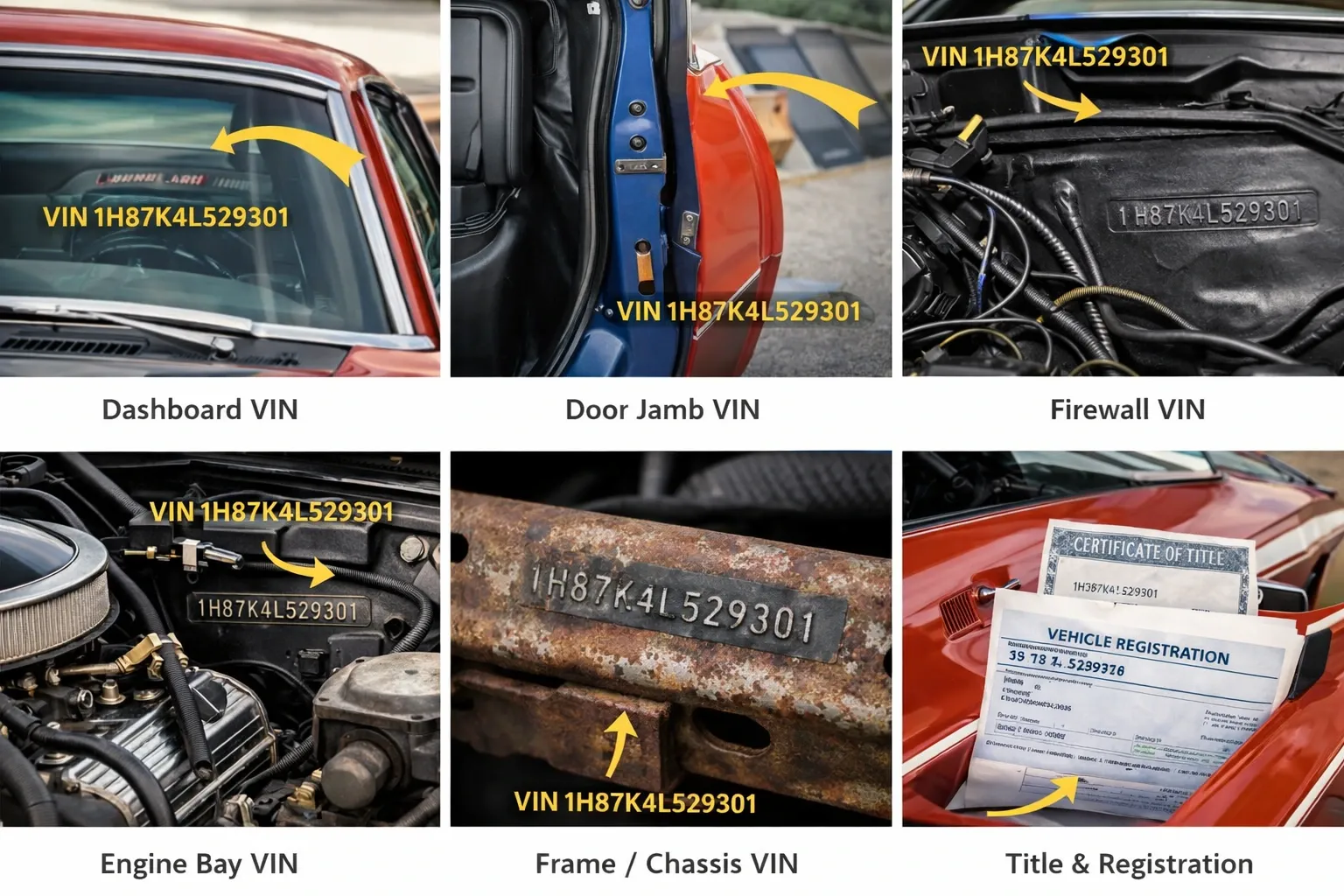
 driver’s side dashboard near the windshield
- driver-side door jamb or door post
- title and registration documents
- firewall
- engine bay
- frame or chassis
- manufacturer identification plate
Because VIN locations were not always standardized on older vehicles, it is always a good idea to compare the VIN on the car with the VIN on the title and registration paperwork.
Read Also: Guide to Checking Classic Car VIN Numbers
How to Decode a Classic or Antique Car VIN in 3 Steps
Decoding a classic or antique VIN does not have to feel complicated. Here is the simplest way to do it.
- 1
Step 1: Find and Record the VIN
Locate the VIN on the vehicle or on the vehicle’s title and registration documents. Once you find it, record it carefully. It is best to take a clear photo and double-check every letter and number before moving forward. - 2
Step 2: Use a Classic VIN Decoder Tool
Enter the VIN into a specialized classic car vin decoder tool designed for older vehicles. This can help you identify important details about the car, such as the make, model, year, engine type, body style, and other available specifications. - 3
Step 3: Verify the Details With Supporting Records
After decoding the VIN, compare the results with the title, registration, seller description, and the vehicle itself. For a deeper background check, you can also use a classic history Report to review available historical records and get more confidence before buying or valuing the vehicle.
What Information Can a Classic Car VIN Reveal?
Depending on the make, year, and VIN format, decoding a classic or antique car VIN may reveal:
- Vehicle Specifications
- Transmission
- Fuel type and capacity
- Engine information
- Drive Type
- No of doors
- No of gears
- Axle type
- Body measurement
- Tyre treads
For collectors and buyers, this information can be extremely useful when verifying originality, researching rarity, or evaluating a vehicle before purchase.
Why VIN Decoding Is Important Before Buying a Classic Car
If you are considering buying a classic or antique car, decoding the VIN should be one of your first steps.
It helps you:
- confirm the vehicle’s identity
- compare the car against the seller’s description
- spot possible inconsistencies
- make a more informed buying decision
- reduce the risk of overpaying for a misrepresented vehicle
In the classic car market, small details can make a major difference in value and authenticity. VIN decoding helps you start with the right information.
Classic VIN Decoder vs Vehicle History Report
These tools work best when used together.
Classic VIN Decoder
A classic car vin decoder helps identify what the vehicle is. It may reveal details such as make, model, engine, year, and body type.
Vehicle History Report
A classic history Report can help you go beyond identification by providing additional background information that may be available for the vehicle.
For buyers, restorers, collectors, and sellers, using both tools can provide a more complete understanding of the vehicle.
Common Challenges When Decoding Antique Car VINs
Decoding an antique car VIN can be more challenging than decoding a modern one. Common issues include:
Non-Standard VIN Formats
Older vehicles often use manufacturer-specific VIN structures.
Worn or Missing VIN Plates
Time, rust, repainting, and restoration work can make VIN plates difficult to read.
Title Errors
Older titles may contain shortened or incorrectly recorded VINs.
Limited Historical Records
Some older vehicles have less data available, especially when compared to newer vehicles.
Restoration Changes
Restored vehicles may include replacement parts or modifications that make visual verification more difficult.
Who Should Decode a Classic Car VIN?
VIN decoding is useful for:
- buyers
- sellers
- collectors
- restorers
- insurers
- appraisers
- classic car enthusiasts
Whether you are purchasing a vehicle, documenting one you already own, or preparing one for sale, decoding the VIN is a practical first step.
Conclusion
Learning how to decode a classic or antique car VIN is one of the smartest steps you can take before buying, selling, insuring, or restoring an older vehicle. It can help verify authenticity, confirm specifications, and give you more confidence in the vehicle you are researching.
The process does not have to be complicated. Find the VIN, run a classic car vin decoder, and verify the results using documents and a classic history Report when needed.
With the right information, you can make better decisions and avoid costly surprises in the classic car market.
If the VIN length is shorter than modern standards, these guides may also help you continue your research:
Frequently Asked Questions About Classic Car VIN Decoding
No. Many classic and antique cars have shorter VINs because older VIN systems were not standardized like modern ones.
Yes, but the process may require a specialized decoder and additional research depending on the manufacturer and VIN format.
It may be located on the dashboard, door jamb, firewall, engine bay, frame, title, or registration documents depending on the vehicle.
It is an excellent starting point, but it is even better when combined with title verification, documentation review, and a classic history Report.
No. This is one of the most important things to understand.
Modern vehicles follow a standard 17-digit VIN format, but many classic and antique cars do not. Older manufacturers used different numbering systems, different VIN lengths, and different coding methods. That means decoding a 5-digit VIN may be very different from decoding a 7-digit or 13-digit VIN.
That is why using a tool built specifically for older vehicles is so important. It is also why supporting resources for different VIN lengths can be helpful when researching an older car.

Content Writer
Peter Adewale is an experienced automotive writer with more than eight years of content writing experience. At Classic Decoder, he creates informative articles on classic cars, vehicle history, VIN research, restoration, and collector-focused automotive topics. Known for his research-driven and reader-focused approach, Peter is passionate about producing content that helps enthusiasts and buyers better understand vintage vehicles, verify important details, and make confident ownership decisions.