
Decode Classic VINs to Get Vehicle History Report and Build Sheet
Popular Articles
How Vehicle History Reports Impact Classic Car Transactions
Paid Classic Car History Check Vs Free Report Compared
How to Check a Classic Car Auction History Before You Buy
How to Detect Mileage Rollback in Classic Cars
How to Spot Hidden Damage Before Buying a Classic Car
How a Build Sheet Helps in Classic Car Restoration
Build Sheet vs Car History Report: What’s the Difference?
How to Verify an Old Car’s Original Specs With a Build Sheet
Finding Your Classic Car's Original Paint Color by VIN
How Does the Build Sheet Influence Classic Car Value?
Recommended Classic VIN Lookup Tools
What Makes a Car Classic? Age, Categories, and Key Differences
Mar 31, 2026

A car is usually considered classic when it is around 20 to 25 years old, but age alone does not decide it. A vehicle may also be seen as classic based on its condition, rarity, originality, design, and collector appeal. That is why the terms classic, vintage, and antique are often related but not always used the same way.
If you are trying to understand whether your car qualifies as a classic, this guide explains the age ranges, the key categories, and the differences that matter most.
What Makes a Car Classic?
A car is generally considered classic when it reaches a certain age and has lasting value beyond ordinary used-car status. In many cases, a classic car is admired for its design, historical importance, rarity, or strong enthusiast following.
A car is more likely to be considered classic when it has:
 an age of about 20 years or more
- distinctive styling or engineering
- collector interest
- good overall condition
- originality or proper restoration
- historical or cultural value
So while age is the starting point, it is not the only thing that matters
How Old Does a Car Have to Be to Be Considered a Classic?
In general, many people consider a car classic once it is 20 to 25 years old. That is the most common rule of thumb among enthusiasts, collectors, and insurers.
Still, the definition can vary depending on who is using it:
- some collectors may consider a 20-year-old performance or limited-production car a classic
- some insurers use their own eligibility rules
- some clubs use narrower definitions
- some local registration rules are based on a specific age threshold
Because of that, there is no single universal age that applies in every situation.
Can a 20-Year-Old Car Be a Classic?
Yes, a 20-year-old car can be considered a classic in many cases.
That usually depends on factors such as:
- rarity
- condition
- low mileage
- enthusiast demand
- historical significance
- whether the car has remained original or been well restored
A mass-produced daily driver may not attract the same attention as a well-kept sports car, luxury model, or special-edition vehicle from the same year. That is why two cars of the same age may not be viewed the same way in the market.
Classic vs Vintage vs Antique Cars
These terms are often used together, but they do not mean exactly the same thing.
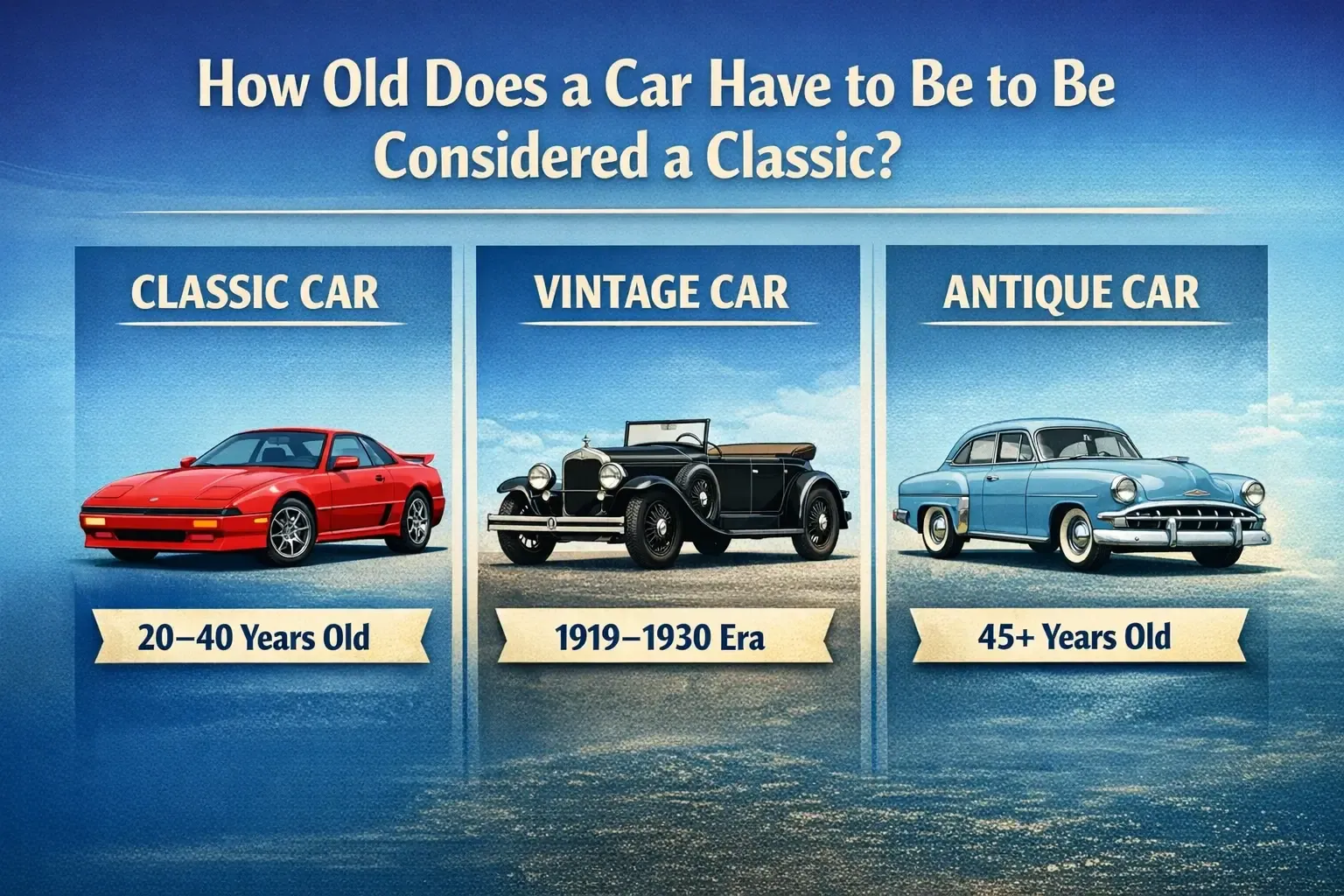
Classic Cars
Classic cars are usually vehicles that are around 20 to 40 years old, though some people use a narrower or wider range. These cars are old enough to have collector interest but are not always old enough to fall into antique status.
Examples often include:
- 1980s performance cars
- 1990s sports cars
- early 2000s enthusiast vehicles
Vintage Cars
Vintage cars usually refer to vehicles built between 1919 and 1930. These cars represent an early era of automotive history and are often recognized for their period styling and craftsmanship.
Vintage cars are usually older than what most people casually call classic cars.
Antique Cars
Antique cars are generally vehicles that are 45 years old or older. In many cases, these are older collector vehicles that may overlap with some classic classifications, depending on local rules and enthusiast use.
In simple terms:
- vintage usually refers to a specific early-era period
- classic usually refers to collectible older cars, often 20+ years old
- antique usually refers to much older vehicles, often 45+ years old
Why Age Alone Is Not Enough
Not every old car is automatically a classic.
A vehicle may be old, but that does not always make it collectible or desirable. A car is more likely to be seen as classic when it stands out for reasons beyond age.
Other important factors include:
Condition
A well-kept vehicle is far more likely to be considered classic than one in poor shape.
Rarity
Low-production cars, limited editions, and hard-to-find models often have stronger classic appeal.
Originality
Cars with original parts, factory specifications, and proper documentation are often valued more highly.
Historical Significance
Vehicles tied to a major era, major brand milestone, or cultural moment often gain stronger classic status.
Collector Demand
If enthusiasts actively want the car, its classic status becomes stronger in the market.
Who Decides Whether a Car Is Classic?
The answer often depends on context.
Collectors and Enthusiasts
Collectors may view a car as classic based on desirability, rarity, and long-term appeal.
Car Clubs
Some clubs use their own membership rules or classification standards
Insurance Companies
Insurance providers often define classic cars based on age, condition, storage, and limited-use requirements.
State or Regional Authorities
Some registration and historic-vehicle rules depend on local laws and age-based thresholds.
That means a car may be treated as classic by one group but not by another.
Classic Car Insurance and Registration
A car’s classic status can matter for more than just collector appeal. It can also affect insurance and registration.
Many insurers offer special classic-car policies for older vehicles that are:
- in good condition
- not used as daily transportation
- driven on a limited basis
- stored properly
These policies may offer benefits such as:
- agreed value coverage
- lower premiums
- mileage-based use
- specialized support for classic vehicles
In some places, older vehicles may also qualify for:
- classic or historic plates
- easier registration rules
- tax or inspection advantages
- exemptions from certain testing requirements
Because these rules vary by location, it is always best to check your local requirements.
Benefits of a Car Being Considered Classic
If a car is considered classic, it may come with advantages beyond status.
Higher Collector Appeal
Classic cars often attract more interest from buyers, collectors, and enthusiasts.
Potential Resale Value
A well-maintained classic may hold value better than an ordinary aging vehicle. Checking its classic car value can help you understand how age, condition, rarity, originality, and market demand affect what the vehicle may be worth. If you eventually plan to move on from your vehicle, understanding how to sell a classic car can also help you protect its value and attract the right buyers.
Special Insurance Options
Owners may qualify for coverage designed specifically for collectible vehicles.
Event and Club Access
Classic status may make a car eligible for shows, club events, and enthusiast communities.
Preservation Value
Many owners enjoy preserving the car’s original character and history.
Modified Cars and Classic Status
Some classic cars are restored or updated rather than kept fully original. That can lead to different classifications within the enthusiast world.
Restomods
A restomod is a classic car updated with modern parts or technology while keeping much of its original style. If you want a deeper explanation, this guide on what is a restomod gives a closer look at how these builds differ from fully original classics.
Street Rods
A street rod is typically an older car that has been customized for performance, style, or drivability.
These vehicles may still be admired and valuable, but they are often viewed differently from fully original examples. Some owners also choose to upgrade comfort, safety, or drivability with tasteful updates, especially when modernizing classic cars for regular enjoyment.
Why VIN Checks and Vehicle History Still Matter
If you are buying, restoring, or collecting a classic car, age and appearance are not enough on their own. You should also verify the vehicle’s identity and history. A classic vehicle history report can help confirm:
- the year the car was made
- engine and manufacturing details
- title issues
- past accidents
- ownership-related records
- whether the car matches its claimed identity
This is especially important when a vehicle has been restored, modified, or sold multiple times.
How to Tell if Your Car May Be Considered Classic
Your car may be considered classic if it checks several of these boxes:
- it is at least 20 years old
- it is in good condition
- it has collector or enthusiast appeal
- it has some rarity or historical value
- it has remained original or has been properly restored
- it may qualify for classic insurance or registration in your area
The more of these factors your car meets, the stronger its classic status is likely to be.
Conclusion
What makes a car classic is not just age. While many cars start to be seen as classic at around 20 to 25 years old, true classic status often depends on a combination of age, condition, rarity, originality, and collector appeal.
Understanding the difference between classic, vintage, and antique cars helps you evaluate vehicles more accurately, whether you are buying, restoring, insuring, or collecting. If you believe your vehicle may qualify as a classic, the next step is to verify its details, confirm its history, and assess how it fits into the collector market.
Frequently Asked Questions
Yes, many insurance companies and car communities consider a 20-year-old car a classic, especially if it is well-maintained, has its original build, and is not heavily modified. Note that most insurance companies or classic car communities consider that the car should be at least 20 years old to be insured or join the communities.
Basically, classic cars are those between the ages of 20 and 40. Each state, however, may have its own regulations as to what a classic car is.
Yes, it does. For the most part, they require the vehicle to have an age of at least twenty to twenty-five years, good condition, and no daily use, because this will diminish the overall performance of the car.
Classic cars are usually older collectible cars, vintage cars usually come from the 1919 to 1930 period, and antique cars are generally much older vehicles, often 45 years old or more.
No. Condition, rarity, originality, history, and demand also matter.

Content Writer
Peter Adewale is an experienced automotive writer with more than eight years of content writing experience. At Classic Decoder, he creates informative articles on classic cars, vehicle history, VIN research, restoration, and collector-focused automotive topics. Known for his research-driven and reader-focused approach, Peter is passionate about producing content that helps enthusiasts and buyers better understand vintage vehicles, verify important details, and make confident ownership decisions.