
Decode Classic VINs to Get Vehicle History Report and Build Sheet
Popular Articles
How Vehicle History Reports Impact Classic Car Transactions
Paid Classic Car History Check Vs Free Report Compared
How to Check a Classic Car Auction History Before You Buy
How to Detect Mileage Rollback in Classic Cars
How to Spot Hidden Damage Before Buying a Classic Car
How a Build Sheet Helps in Classic Car Restoration
Build Sheet vs Car History Report: What’s the Difference?
How to Verify an Old Car’s Original Specs With a Build Sheet
Finding Your Classic Car's Original Paint Color by VIN
How Does the Build Sheet Influence Classic Car Value?
Recommended Classic VIN Lookup Tools
How to Get a Classic Car Vehicle History Report by VIN
Mar 30, 2026

A classic car vehicle history report helps you check an older vehicle’s background before you buy, sell, insure, or restore it. To start, you can run a classic car vin lookup to confirm the vehicle’s Specification details, then use a history report to review important past records. If you also want to verify original factory specifications, a classic car build sheet can help you better understand how the vehicle was originally configured.
For classic car buyers, collectors, and restorers, this is one of the most important steps to take before moving forward with any vehicle.
What Is a Classic Car Vehicle History Report?
A classic car vehicle history report is a report that uses a vehicle’s VIN to show important background information about that specific car. It can help you understand more than just the make and model. It may also reveal records connected to the car’s past, depending on what data is available.
A report may include details such as:
 title history
- accident history
- theft records
- salvage records
- lien and loan records
- auction history
- ownership-related records
- basic vehicle specifications
Because many classic cars were built before VIN formats were standardized, their VINs are often shorter than modern VINs and may be harder to research. Even so, a VIN history check is still one of the most useful starting points when evaluating a classic vehicle.
Why Run a VIN History Check on a Classic Car?
A VIN history check helps you understand whether the car’s story matches its paperwork and condition.
This matters because classic cars can be:
- restored
- modified
- re-titled
- rebuilt
- misrepresented
- sold with incomplete records
By running a classic car vehicle history report, you may be able to spot problems before they become expensive surprises.
It Helps Verify the Vehicle
A VIN history check helps confirm that the car’s identity matches its documents and seller description.
It Helps Reveal Title Issues
A report may show whether the car has title problems such as salvage, rebuilt status, or other title-related records.
Read Also: How To Register A Car Without A Title
It Helps Uncover Accident or Damage Records
If records are available, you may be able to see whether the vehicle has been involved in accidents or sustained serious damage.
It Helps You Check for Liens or Loans
A report may show whether there are financial claims or loan-related issues connected to the vehicle.
It Helps You Buy With More Confidence
When you know more about the car’s past, you can make a better decision and negotiate from a stronger position.
Where to Find the VIN on a Classic Car
Before you can get a classic car vehicle history report, you need the VIN.
On a classic car, the VIN may be found in different places depending on the manufacturer and year. Common places include:
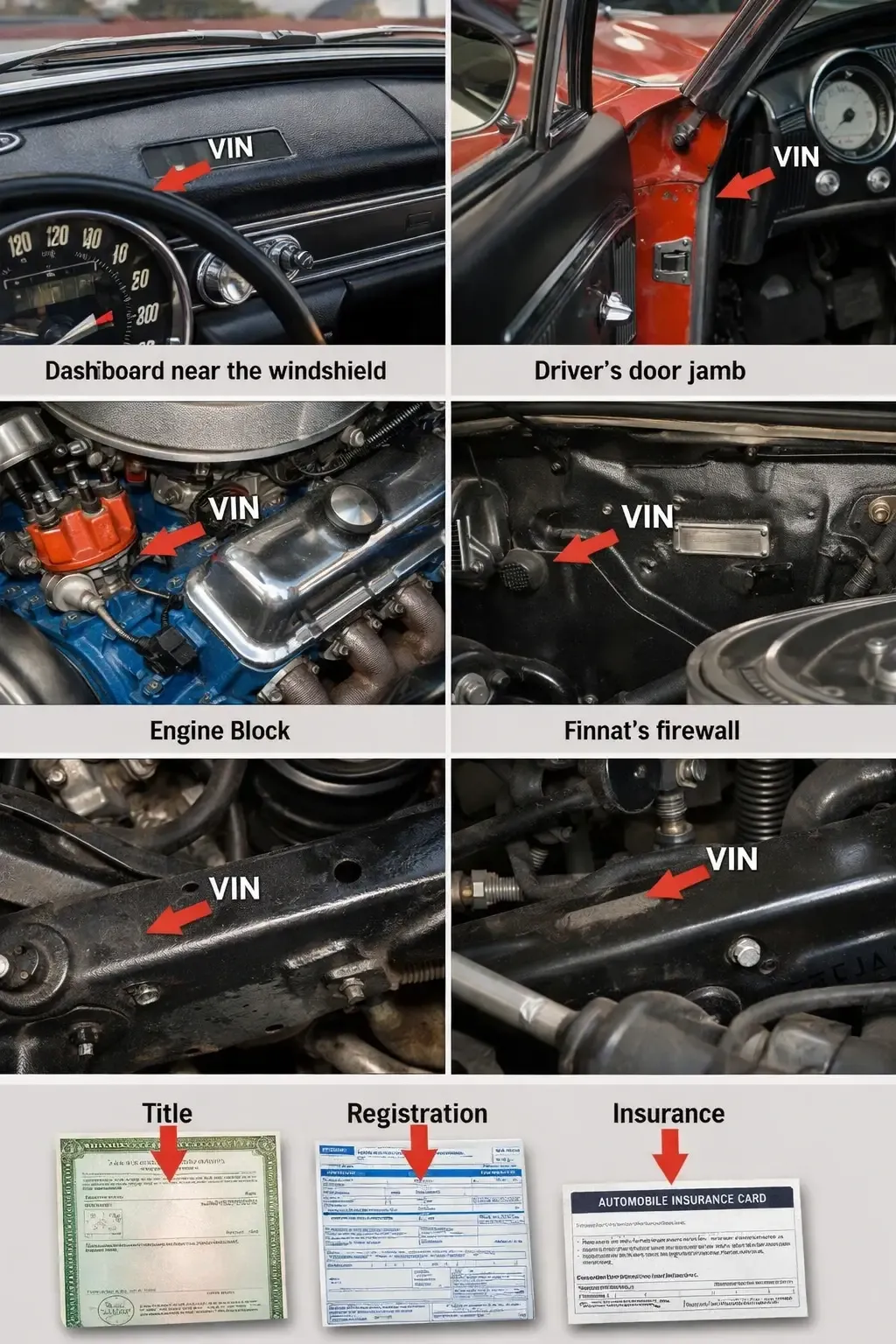
- dashboard near the windshield
- driver-side door jamb or door post
- engine block
- engine firewall
- metal frame or chassis
- title documents
- registration documents
- insurance papers
- maintenance records
- bill of sale or purchase records
Because classic cars were not always labeled in the same way as newer vehicles, it is a good idea to check both the car and the paperwork.
How to Get a Classic Car Vehicle History Report in 3 Simple Steps
Getting a classic car history report is easier when you keep the process simple.
- 1
Step 1: Find and Record the VIN
Locate the VIN on the vehicle or in its documents. Once you find it, write it down carefully or take a clear photo. Make sure every number and letter is correct. - 2
Step 2: Run the History Check
Use the VIN to run a history check through a classic car history report provider. This helps connect the vehicle to available background records and gives you a clearer starting point for research. - 3
Step 3: Review the Results Carefully
Once you get the report, compare it with the vehicle’s title, registration, seller details, and the condition of the car itself. Look closely for any red flags or details that do not match.
What Can a Classic Car Vehicle History Report Show?
A classic car vehicle history report can reveal valuable details about a vehicle’s background, condition, and past records. The report can help you uncover important details before buying, selling, or restoring a classic car.
Title History
It may show whether the car has a clean title or title brands such as salvage, rebuilt, or junk.
Accident History
The report may include past accidents, damage records, or insurance-related incidents.
Theft Records
It can show whether the vehicle has ever been reported stolen.
Lien and Loan Records
Some reports may include liens, loans, or other financial claims tied to the car.
Auction or Sales History
If available, the report may show auction records or previous sale activity.
Ownership History
It may include previous owners or registration changes.
Vehicle Specifications
The report may confirm details like make, model, year, engine, transmission, body style, and manufacturing location.
Salvage and Damage Records
Some reports may also show severe damage or salvage-related history.
Why a Classic Car History Report Matters Before Buying
If you are thinking about buying a classic car, a history report can help you avoid common mistakes.
It Can Help You Avoid Fraud
Some classic cars are misrepresented, cloned, or incorrectly described. A VIN history check can help you spot inconsistencies.
It Can Help You Estimate Value More Accurately
A car with title issues, prior damage, or major history concerns may not be worth the same as a similar car with cleaner records.
It Can Help You Understand the Car’s Past
The more you know about the vehicle’s background, the easier it is to decide whether the car fits your goals and budget.
It Can Protect Your Investment
Classic cars can be expensive. A history report helps reduce the chance of buying a vehicle with hidden issues.
Common Red Flags to Watch For in a Classic Car History Report
When reviewing a classic car history report, pay close attention to:
- title branding
- salvage history
- theft records
- multiple ownership changes in a short period
- accident history
- loan or lien issues
- records that do not match the seller’s story
- mismatches between the VIN report and the car’s physical details
These do not always mean the car is a bad purchase, but they do mean you should investigate further.
What to Do After You Get the Report
A report is useful, but it should not be the only thing you check.
After getting the report, you should also:
- compare it with the title and registration
- inspect the VIN on the vehicle
- review the car’s condition in person
- ask the seller questions about any red flags
- get a pre-purchase inspection if possible
This gives you a more complete understanding of the vehicle before making a final decision.
Conclusion
A classic car vehicle history report is one of the smartest tools you can use before buying, selling, or researching an older vehicle. It helps you verify the car’s background, review important records, and make a more informed decision with less risk.
Before moving forward with any classic vehicle, get a classic vehicle history report to review its past records and ownership history. If you also want to verify factory specifications and originality, obtaining a build sheet by VIN can help you better understand how the vehicle was originally built.
Frequently Asked Questions
Yes. If you have the VIN, you may be able to get a classic car vehicle history report depending on the records available for that vehicle.
Yes. Many classic cars have VINs shorter than the modern 17-digit format.
It may show title history, theft records, accident records, lien or loan records, auction information, and basic vehicle details.
It is a very important step, but it should also be combined with document checks, originality review, and a physical inspection.

Content Writer
Peter Adewale is an experienced automotive writer with more than eight years of content writing experience. At Classic Decoder, he creates informative articles on classic cars, vehicle history, VIN research, restoration, and collector-focused automotive topics. Known for his research-driven and reader-focused approach, Peter is passionate about producing content that helps enthusiasts and buyers better understand vintage vehicles, verify important details, and make confident ownership decisions.